Robots in this article
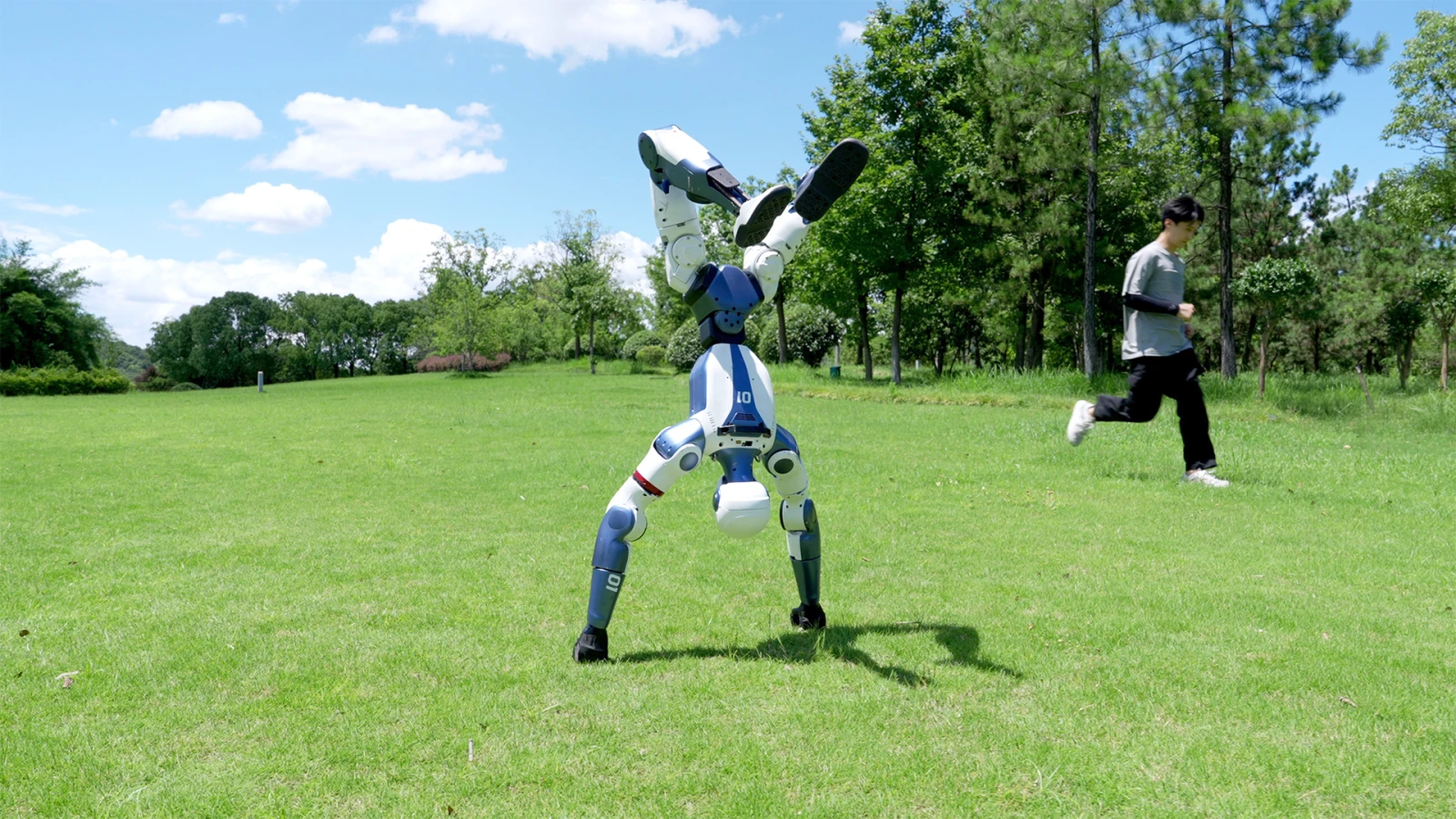
Unitree R1
$5,900
List price, checked 23 Nov 2026.
3-year cost: $5,900, plus parts and consumables.
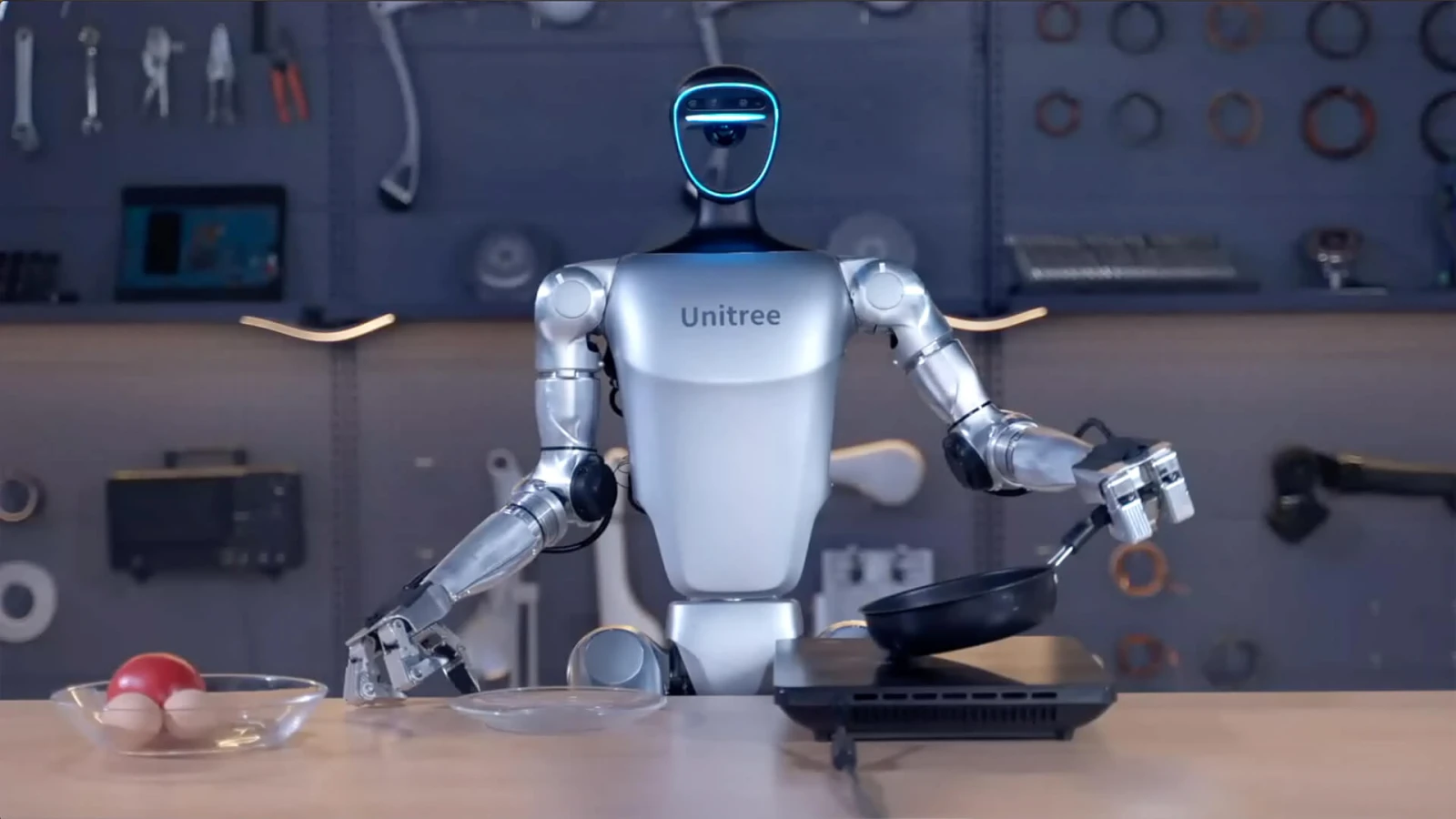
Unitree G1
$13,500
List price, checked 23 Nov 2026.
3-year cost: $13,500, plus parts and consumables.
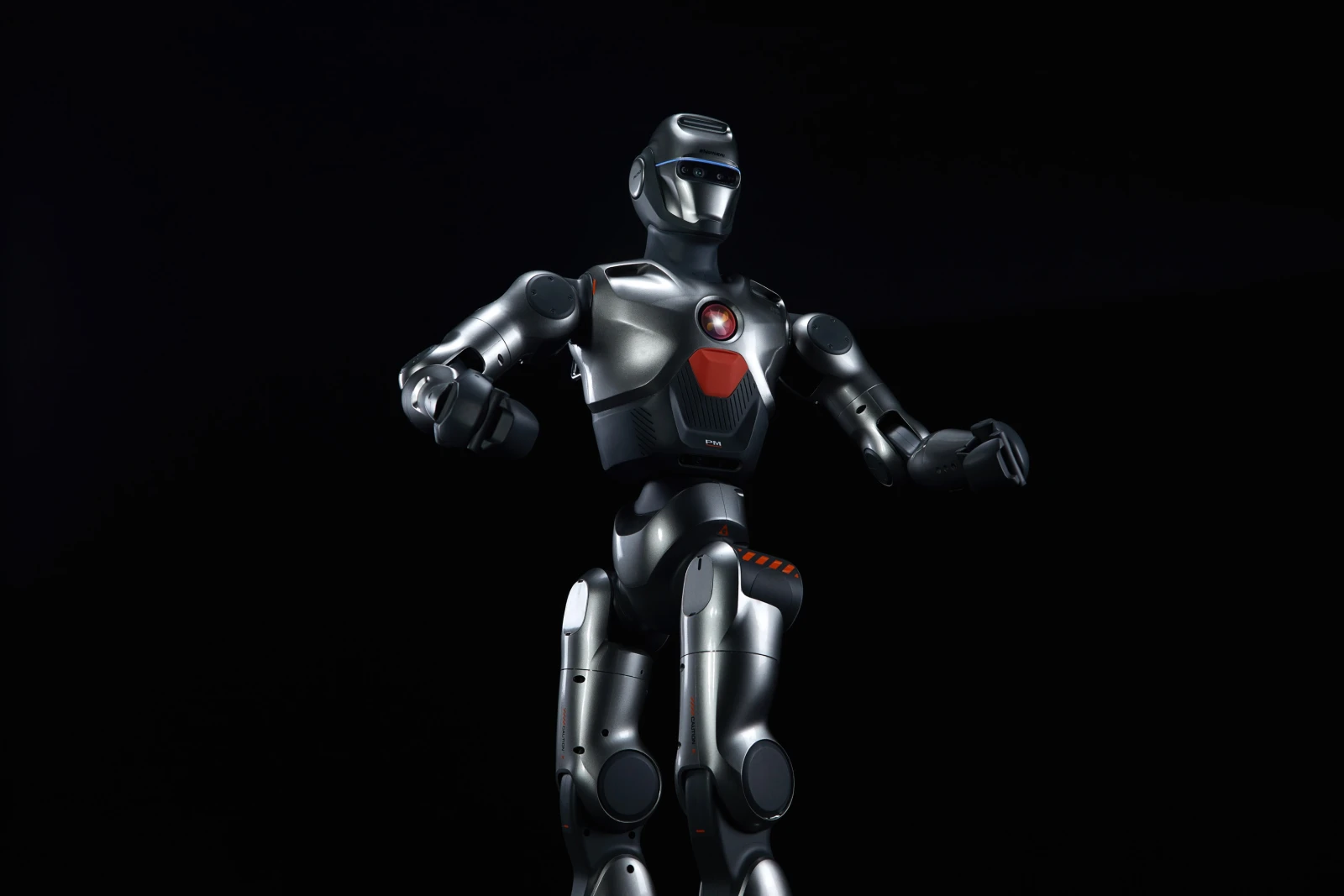
PM01
CN¥88,000
List price abroad. We found no price for the United States.
3-year cost: CN¥88,000, plus parts and consumables.
Unitree's R1 costs $5,900 on Unitree's own site and $8,990 at RobotShop in the US, or £8,038.80 at RobotShop's UK store. The G1 is $13,500 direct and $17,900 from the same dealer (23 November 2026). The R1 AIR, a pared-down R1, is $4,900 direct. All three are shipping, none of them does chores, and the versions you can program yourself have no public price.
I would buy the Unitree R1 direct for demos, teaching and tinkering with movement. Pay the G1's $13,500 only if you will use its lidar, depth camera and second hour of battery, and wait on the bigger H2 until a paying customer has one.
The comparison rests on Unitree's, Booster's and EngineAI's own pages and on dealer listings we checked on 22–23 November 2026. It adds the three robots most often compared with these two: Unitree's larger H2, the Booster T1 and EngineAI's PM01. For every humanoid price, see How much does a humanoid robot cost? Every price we can verify.
Five humanoids on one table
On 23 November 2026 the R1 and G1 were shipping, the H2 was a pre-order, the Booster T1 was discontinued with only dealer stock left, and the PM01 was shipping in China. In the table, joints (often written DOF, for degrees of freedom) count the separate ways the robot's body can move. Lidar is a spinning laser that measures distances to map a room, and a depth camera measures how far away things are.
| Unitree R1 AIR / R1 | Unitree G1 | Unitree H2 | Booster T1 | EngineAI PM01 | |
|---|---|---|---|---|---|
| Status (23 Nov 2026) | Shipping | Shipping | Pre-order | Discontinued | Shipping (China) |
| Maker price | $4,900 / $5,900 | $13,500 | $29,900 | Not published | Not published (¥88,000 launch price, to 31 Mar 2025) |
| Height | 123 cm | 132 cm | 182 cm | about 1.2 m | 140 cm |
| Weight with battery | about 27 / 29 kg | about 35 kg | about 70 kg | about 30 kg | about 44.5 kg |
| Joints (DOF) | 20 / 26 | 23 | 31 | 23 (31 with grippers, 41 with hands) | 24 |
| Battery | about 1 h | about 2 h | about 3 h | about 2 h walking, 4 h standing | about 2 h |
| Arm load | “about 3~5kg”, varies with posture | about 2 kg | about 7 kg rated, 15 kg peak | not stated | not stated |
| Hands | None (optional on R1 EDU) | None (optional on G1 EDU) | None (optional on H2 EDU) | Grippers or hands on dearer versions | Not listed |
| Vision | Single camera (AIR) / stereo (R1) | Depth camera + 3D lidar | Wide-angle stereo camera | not confirmed | Two stereo cameras; 3D lidar on Navigation version |
| Developer access | EDU only | EDU only | EDU only | Open APIs and ROS 2 (dealer listing) | “Secondary development” supported |
| Warranty | 6 / 8 months | 8 months (EDU 18) | 8 months (EDU 12) | not stated | not stated |
Sources: Unitree R1, G1 and H2 pages, accessed 22–23 Nov 2026; RobotShop Booster T1 listing (data as of 17 Nov 2026) and Generation Robots T1 listing; EngineAI PM01 page, accessed 22 Nov 2026; The Robot Report, 27 Dec 2024, for the PM01 launch price.
Unitree's prices exclude tax and shipping (Unitree, 22–23 Nov 2026).
What $7,600 more buys in a G1
The G1 costs $7,600 more than the standard R1, or $8,600 more than the R1 AIR. On Unitree's spec sheets, that buys four things.
Battery comes first. The G1 lists about two hours and the R1 about one, which for a classroom or an event is the difference between one session and two before a swap.
Then sensing. The G1 has a depth camera and a 3D lidar; the R1 has a stereo camera and the AIR a single one. Lidar and depth data are what research groups use for mapping, and for navigation that doesn't depend on someone holding the controller.
The G1 also has a bigger body: 132 cm and about 35 kg against 123 cm and 27–29 kg, with a knee rated at 90 N·m (120 N·m on the EDU). Arm load stays modest on both, about 2 kg on the base G1 (3 kg on the EDU) and “about 3~5kg” on the R1, depending on arm posture.
Last, and most useful to a lab, is a proper research version. The G1 EDU offers up to 43 joints, optional three-fingered force-controlled hands, extra wrist and waist joints, an optional computer “such as Orin” and an 18-month warranty instead of 8 (Unitree, accessed 22 Nov 2026). The R1 EDU also offers hands and extra compute, with a 12-month warranty.
None of that adds household use. Both base models have no working hands and ship with a hand-held controller, and Unitree's G1 page tells buyers to “keep a sufficient safe distance between the humanoid robot and people”. In China, Unitree added a G1+ at 95,000 yuan including tax for the standard version (Sina Finance, 14 Sep 2026); we found no US or UK listing for it on 23 November 2026.
Inside the R1 family, the $1,000 step from AIR to R1 buys a moving waist and head (two joints each, none listed on the AIR), five joints in each arm instead of four, and stereo vision instead of a single camera. That matters if the robot will perform in front of people. The R1 EDU, sold on a quote, has 26 to 40 joints, optional dexterous hands and an optional extra computer such as an Nvidia Orin rated at 40 to 100 TOPS (trillions of operations per second, a rough measure of computing power).
All three R1 versions stand 1,230 mm tall and share an 8-core processor, a 4-microphone array and speaker, Wi-Fi 6, Bluetooth 5.2, over-the-air updates, a hand-held controller, a charger and a quick-release battery of about one hour. A built-in multimodal model handles voice and images, so you can talk to the robot and it can describe what it sees (Unitree R1 page, accessed 23 Nov 2026).
The EDU catch: no public price for a programmable Unitree
Unitree's spec tables mark “secondary development”, the right and tools to program the robot yourself, as available only on the EDU versions of the R1, G1 and H2. At their published prices the R1 AIR, R1, G1 and H2 show a “/” in that row (Unitree, accessed 22 Nov 2026).
Every EDU version is “Contact Sales”. So the cheapest Unitree humanoid you can program has no public price, and the $4,900 and $13,500 figures buy robots you drive with the controller, running the moves Unitree ships.
For the EDU versions, Unitree lists a secondary development manual and an optional high-power computing module from “multiple brands and models”; budget for that computer on top. EngineAI lists secondary development for the PM01, a ROS deployment framework (ROS is the Robot Operating System, a widely shared open-source toolkit for programming robots), public training and deployment code on GitHub, and an NVIDIA Jetson Orin NX (16 GB) as the high-compute option (EngineAI, accessed 22 Nov 2026). Dealers list “Open APIs & ROS 2” for the Booster T1, with an Intel i7-1370P and an NVIDIA Jetson AGX Orin rated at 200 TOPS (RobotShop, data as of 17 Nov 2026), though Booster's documentation site now covers only the K1 and T2.
If you will write software, you need an EDU version or the PM01. Get quotes for the G1 EDU, R1 EDU and PM01; of the three, only EngineAI publishes its training and deployment code openly. Buying for a university lab? Ask the seller in writing which version you are getting and whether the low-level interfaces are unlocked.
Dealer markups in four markets, and the VAT question
Outside China, most buyers pay a dealer rather than Unitree. RobotShop, an authorised Unitree dealer, sells both robots in four markets and says its price covers logistics and customs clearance and “full manufacturer-backed warranty coverage”. None of its pages says whether tariffs or VAT are included.
| Robot | Unitree direct (US) | RobotShop US | RobotShop Canada | RobotShop UK | Europe |
|---|---|---|---|---|---|
| R1 (entry “R1-Basic”) | $5,900 | $8,990, backorder | CAD 12,842.86, backorder | £8,038.80, special order | €10,164, in stock (RobotShop EU) |
| G1 (base) | $13,500 | $17,900, special order | CAD 25,700, special order | £19,200, special order | from €27,000 inc. VAT, out of stock (Génération Robots, France) |
| Booster T1 Standard | none | $41,224, special order (17 Nov 2026) | not checked | not checked | used demo unit €19,500 inc. VAT (Generation Robots) |
Sources: Unitree pages; RobotShop US, Canada, UK and EU listings, accessed 23 Nov 2026; Génération Robots G1 page via our tracker record, 23 Nov 2026; RobotShop Booster T1 (data as of 17 Nov 2026); Generation Robots T1 listing, 22 Nov 2026.
All four R1 listings describe the entry “R1-Basic-US” configuration, with dummy hands and no high-power computer. In the US that dealer price is $3,090 above Unitree's direct price for the R1. The UK listing mixes “UK”, “EU” and “R1-Basic-US” labels on one page, so get the configuration and the delivered price in writing before you pay.
The UK prices raise their own questions. If the £8,038.80 R1 already includes 20% VAT, it is £6,699 before tax. The UK G1 at £19,200 is well above the US dealer's $17,900. Ask before assuming either includes VAT.
What does importing direct cost instead? Unitree's prices exclude tax and freight, and a 30–70 kg robot travels as freight. For Great Britain, GOV.UK says goods over £135 bought from abroad attract import VAT at the rate for the goods, which is the 20% standard rate for most goods, plus customs duty at the rate set by the product's tariff code, charged on the price plus postage, packaging and insurance. On Unitree's own prices, 20% VAT alone adds at least $1,180 to an R1 and $2,700 to a G1 before freight and duty. We have not worked out the duty, because it depends on the tariff code the importer uses.
For the US, Canada, Australia and the other markets we have no dated duty figure to quote. We found no dealer price at all for Australia, New Zealand, India, Singapore or the UAE, so ask Unitree for a delivered quote there. The safe step is the same everywhere: get a written delivered price that names tax, duty, freight and who handles a warranty claim.
Buyers outside North America should make two more checks. Unitree lists a charger in the box but not its input voltage, so confirm it handles 230–240 V mains in the UK, Ireland, Australia, New Zealand and India. With warranties of 6 to 18 months, also ask whether repairs are done locally or mean shipping the robot back.
Budget on top for a spare battery, given the R1's one-hour run time (Unitree lists no battery price on its page); floor mats for practice sessions, in case the robot falls on a hard floor; and repairs after a 6- or 8-month warranty, which is short for a robot with 20 to 26 motors.
The R1's price path since July 2025
Unitree announced the R1 on 25 July 2025 at a starting price of 39,900 yuan, about $5,566 at the time (Reuters, 25 Jul 2025). Bloomberg reported it the same day at 25 kg with 26 joints, from a company video; Unitree's page now lists about 29 kg with battery.
A global pre-order opened on AliExpress in April 2026 at just over $6,800, with a 30 June shipping date (eWeek, 10 Apr 2026).
On 26 June 2026 the Hangzhou city government reported the Chinese starting price cut to 29,900 yuan, with immediate delivery from spot stock (eHangzhou, 26 Jun 2026). Today's $4,900 for the AIR and $5,900 for the R1 on Unitree's US page sit below that AliExpress pre-order price.
H2, Booster T1 and PM01 in brief
The Unitree H2 is a full-size humanoid: 182 cm, about 70 kg, about three hours of battery, 31 joints, and arms rated at about 7 kg (Unitree). Unitree lists it at $29,900, and I still treat it as a pre-order. North American distributor Toborlife AI took pre-orders from $40,900 with a $2,500 deposit and promised phased deliveries from April 2026 (Toborlife AI press release, 13 Feb 2026), and we found no confirmed delivery to a paying customer. It is built for labs and companies. A lab that needs a full-size body should wait for a confirmed H2 delivery before paying a distributor's deposit.
The Booster T1 is a roughly 1.2 m, 30 kg humanoid popular in robot football, with grippers or hands on the dearer versions. It survives only as leftover dealer stock: RobotShop's listing says the T1 was discontinued ahead of the T2, and Booster's site lists only the T2 and K1. Buy one only at a clear discount, and ask the dealer how long spare parts will be stocked. Record: Booster T1.
EngineAI's PM01 is a 140 cm, about 44.5 kg humanoid from Shenzhen, now sold in Education and Navigation versions; the Navigation version adds a 3D lidar and the Education version a chest touch screen (EngineAI, accessed 22 Nov 2026). It launched at 88,000 yuan, about $12,000 at the time, a price valid to 31 March 2025 (The Robot Report, 27 Dec 2024). EngineAI's page shows no current price and links to an unnamed shop. We found no official route to buy one outside China.
Booster's newer robots publish no prices either. The K1 is about 95 cm and 19.5 kg, with 22 joints and Python and C++ SDKs, the kits programmers use to write software for it; Booster shows no price on its site (accessed 22 Nov 2026). Record: Booster K1. The T2 is the 140 cm, 31-joint successor to the T1.
Grippers at best, an hour of battery: no chores
None of the five is sold for housework, and no maker claims any of them can tidy, cook or do laundry on its own. Unitree's own tagline for the R1 is “Movement first, tasks as well”, and its page says the humanoid field is “in the early stages of exploration” (Unitree, accessed 23 Nov 2026). Buyers noticed at launch that the R1 AIR and R1 have no working hands (Notebookcheck, 26 Jul 2025). At one hour per charge the R1 is a session robot, and swappable batteries only stretch that.
Across the five, base arm loads run from about 2 kg (G1) to about 7 kg rated (H2), and batteries last one to three hours. The R1, G1 and H2 at their listed prices have no working hands. Out of the box, Unitree's robots and the PM01 move under a hand-held remote; any self-directed behaviour is something EDU owners program.
Buyers often set the R1 against the 1X NEO. The R1 costs about a quarter of a NEO ($20,000, or $499 a month) and you can have one now. It is a 123 cm robot with about an hour of battery and no hands. NEO is about 168 cm and about 30 kg, with hands and about four hours of battery, and is sold for chores with remote help; it is also a US pre-order that no customer has yet (1X product and order pages, accessed 22 Nov 2026). If you want help around the house, wait, and read 1X NEO review: price, order terms, privacy and who should wait and Home robots you can buy or order today. The Weave Isaac, a wheeled robot sold for laundry and tidying in California, is in the second of those.
Where these robots do fit, the job decides. An events company or school that wants the lowest-cost humanoid that walks, runs and talks should buy the R1 AIR at $4,900. If the robot will stand in front of an audience, the R1's waist and head movement and stereo vision cost $1,000 more. A university lab that needs longer sessions, lidar and depth sensing, or a route to the G1 EDU, should buy the G1 at $13,500. And a family with small children should think twice: at 29 kg with motors in every joint, an R1 needs supervision and clear space.
Demos: autonomous or remote-controlled?
| Demo | What is known |
|---|---|
| R1 launch video (flips, kicks, running, July 2025) | Not stated (Engadget, 26 Jul 2025) |
| G1 “influencer” robots seen online | Puppeted by remote operators, as Wired reported (cited by Wikipedia, accessed 22 Nov 2026) |
| H2 reveal video (October 2025) | Not stated |
| PM01 | EngineAI says motion is learned from motion capture; not stated for specific demos |
| Booster T1 promotional videos | Not stated |
Unitree's pages also warn that “some sample functions on this page are still being developed and tested”.
UniPwn and keeping the robot off your main network
All five have cameras and microphones and connect over Wi-Fi. In September 2025, researchers disclosed UniPwn, a Bluetooth flaw that could spread between Unitree's Go2, B2, G1 and H1 robots, and reported undisclosed telemetry (data the robot sends back about itself) streaming to servers in China. Unitree said on 29 September 2025 that it had completed most fixes (IEEE Spectrum, 25 Sep 2025). The report did not name the R1.
We found no official statement from Unitree, Booster or EngineAI on what their robots send to the cloud. In a school or lab, keep the robot on its own network and update the firmware. In the UK and EU, UK GDPR and GDPR cover any recordings it makes of students or staff.
If you do buy at the dealer prices of $8,990 and $17,900 in the US, or £8,038.80 and £19,200 in the UK, insist on a written delivered price that says whether VAT is included and where warranty repairs happen. Follow price changes on Unitree R1 and Unitree G1; the other live records are Unitree H2 and PM01, and more robots are in Humanoid robots.
Sources
- Unitree R1 product page
- Unitree G1 product page
- Unitree H2 product page
- Unitree R1 Humanoid Robot (US listing, rechecked 23 Nov 2026)
- Unitree R1 Humanoid Robot (UK listing, rechecked 23 Nov 2026)
- Unitree G1 Humanoid Robot (US listing, rechecked 23 Nov 2026)
- Booster T1 Humanoid Robot (Standard) (data as of 17 Nov 2026)
- Booster T1 humanoid robot (used demonstration unit)
- Booster Robotics home page (T2 and K1)
- Booster K1 product page
- PM01 product page (2026 Education and Navigation versions)
- EngineAI releases PM01 humanoid robot for commercial, educational use
- Unitree releases upgraded G1+ humanoid, standard version 95,000 yuan
- Toborlife AI Launches Unitree H2 Humanoid Robot Pre-Order
- Unitree robot exploit (UniPwn)
- Unitree Robotics
- This humanoid robot can do cartwheels, handstands and roundhouse kicks at less than $6,000
- Unitree R1 Humanoid Robot (Canada listing)
- Unitree G1 Humanoid Robot (Canada listing)
- Unitree G1 Humanoid Robot (UK listing)
- Unitree R1 Humanoid Robot (EU listing)
- Robot humanoïde Unitree G1
- Tax and customs for goods sent from abroad
- VAT rates
- China's Unitree Offers a Humanoid Robot for Under $6,000
- China's Unitree prices new humanoid robot at deep discount to 2024 model (Reuters)
- Unitree makes humanoid robots more affordable
- China's Unitree debuts $5,900 humanoid robot that flips, fights, and runs
- Humanoid robot for consumers: Unitree R1 launches starting at US$5,900
- China's Unitree to Launch $4K Humanoid Robot Globally in the Coming Days
- NEO product page